



The Power of Layered Lighting
The Power of Layered Lighting
When it comes to crafting the perfect interior, lighting is undoubtedly the most transformative element at your disposal. Yet, it is frequently treated as a functional afterthought; a simple flick of a switch to banish the dark. In truth, relying on a single, blazing ceiling pendant to illuminate a room is one of the most common faux pas in home design. To achieve a truly sophisticated and inviting space, you must embrace the concept of layered lighting. This design technique, favoured by top interior decorators across the UK, involves blending multiple light sources to create depth, warmth, and versatility. In this guide, we explore how to master this art by expertly combining pendant and wall lights to curate the perfect ambiance.
Layered lighting fundamentally relies on three core categories: ambient, task (often called reading), and accent lighting. Ambient lighting provides the overall baseline illumination, essentially replacing natural daylight. Task lighting is highly focused, designed to assist with specific activities like reading in a plush armchair or chopping vegetables on a kitchen island. Accent lighting, perhaps the most glamorous of the three, is used to highlight architectural features, artwork, or simply to add a wash of atmospheric glow to a dark corner. According to interior design experts at Ideal Home, blending these three distinct layers is the ultimate secret to a room that feels simultaneously functional and deeply relaxing.
When you intentionally combine pendant lights and wall lights, you are effectively marrying the bold centrepiece of a room with the subtle, mood-enhancing fringes. A striking pendant light often acts as the primary visual anchor, drawing the eye upwards and establishing the design narrative of the space. Whether it is a sleek, mid-century modern brass dome suspended over a dining table or an oversized woven rattan shade in a bohemian bedroom, the pendant dictates the room's overarching character. However, on its own, a pendant can cast harsh, unflattering downward shadows, making the far edges of your room feel distinctly gloomy and uninviting.
This is precisely where wall lights, or sconces, become absolutely indispensable in your interior decor scheme. By installing wall lights at eye level, you introduce a soft, horizontal glow that beautifully counteracts the downward glare of the overhead pendant. Wall lights wash the vertical surfaces with warmth, visually expanding the space and smoothing out harsh contrasts. They introduce an intimate, cosy aesthetic that is paramount during those long, notoriously dark British winters. Renowned design authorities, such as Homes & Gardens, frequently highlight how carefully curated sconces add layered luxury and a tactile dimension to modern interiors.
Ultimately, the true power of layered lighting lies in its inherent versatility. By putting your pendant and wall lights on separate dimmer switches, you afford yourself complete, granular control over the room’s atmosphere. You can seamlessly transition a space from a brightly lit, energetic hub for lively family gatherings to a serene, softly glowing sanctuary perfect for unwinding with a glass of wine. As we delve further into this guide, we will unpack the precise strategies for pairing these bespoke fixtures, ensuring your home benefits from lighting that is as exceptionally stylish as it is undeniably practical.
Understanding the Three Types of Lighting: Ambient, Task, and Accent
To truly master the art of layering light within your home, one must first grasp the foundational principles of illumination design. Simply installing a single ceiling rose and hoping for the best often results in a flat, uninspiring space that lacks both warmth and functionality. Professional interior designers and architects rely on a tried-and-tested triumvirate of illumination: ambient, task, and accent lighting. By strategically weaving these three layers together, you can transform an ordinary room into a dynamic, welcoming sanctuary that caters to both aesthetics and practical daily living.
Ambient Lighting: The Foundation of Your Scheme
Often referred to as general lighting, ambient light acts as the primary source of illumination in any given room. Its primary objective is to provide a comfortable, even wash of light that allows you to navigate the space safely and comfortably, mimicking the role of natural daylight once the sun has set. This layer sets the overall tone and baseline ambience of your room.
Typically, ambient lighting is achieved through central overhead fixtures, such as grand chandeliers, flush mounts, or strategically placed pendant lights. When planning your ambient layer, it is essential to consider the colour temperature of your bulbs; warm white (around 2700K) is highly recommended for living rooms and bedrooms to foster a sense of cosiness and relaxation. Without a properly executed ambient foundation, the subsequent layers of light will struggle to harmonise, potentially leaving your space feeling disjointed.
Task Lighting: Fulfilling Functional Needs
As the name suggests, task lighting is entirely dedicated to practicality. This highly focused layer of light is directed towards specific zones where daily activities take place, such as reading in a comfortable armchair, chopping vegetables on a kitchen island, or applying makeup at a dressing table. Task lighting must be sufficiently bright to prevent eye strain and fatigue, yet it should never cast harsh reflections or intrusive shadows.
When combining pendant and wall lights, task lighting frequently takes centre stage. For example, a row of low-hanging pendant lights suspended directly above a dining table or kitchen workbench provides superb task illumination. Similarly, adjustable wall lights or articulated sconces mounted beside a headboard offer the perfect, glare-free light for bedtime reading. To maximise its effectiveness, task lighting should always operate on a separate circuit or switch, allowing you to utilise it only when a specific chore or activity demands it.
Accent Lighting: The Dramatic Flourish
If ambient light provides the canvas and task lighting adds functionality, accent lighting is the artistic flourish that brings a room to life. This tertiary layer is designed to draw the eye, highlight architectural features, and create visual interest. Whether you wish to showcase a beloved piece of artwork, illuminate a textured brick wall, or highlight the beautiful craftsmanship of a bespoke alcove, accent lighting provides the necessary contrast and drama.
Typically, accent lighting requires a directional light source that is roughly three times as bright as the surrounding ambient light in order to stand out effectively. Wall lights are exceptionally adept at fulfilling this role. Up-and-down wall sconces can project striking geometric silhouettes against an otherwise blank wall, effortlessly elevating the room's character. Moreover, incorporating high-quality LED fixtures allows for precise beam control, ensuring that your accent lighting highlights your chosen focal points with absolute perfection.
By understanding and respecting the distinct roles of ambient, task, and accent lighting, you establish a robust framework for your interior design. The true magic, however, happens when you seamlessly layer these elements together, resulting in an environment that is as beautifully atmospheric as it is brilliantly functional.
Pendant Lights: A Focal Point with Function
When orchestrating a beautifully lit room, pendant lights often act as the crowning jewels of your interior design scheme. Serving a dual purpose, these suspended fixtures are expertly engineered to provide both a breath taking focal point and essential task illumination. Understanding how to harness their potential is the first crucial step in mastering the art of layered lighting.
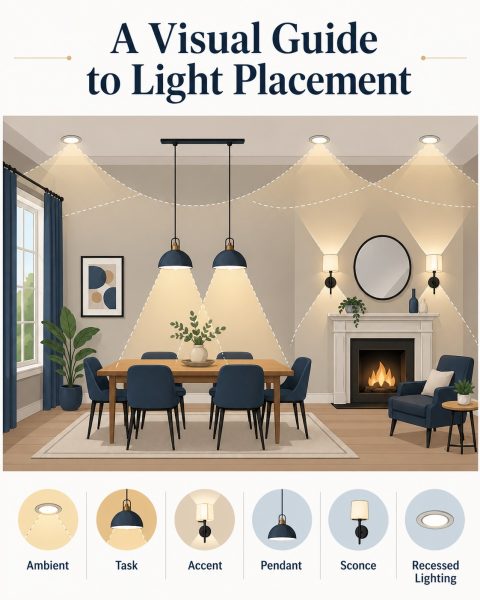
visual guide to light placement
Anchoring the Room's Aesthetic
By their very nature, pendant lights command attention. Suspended from the ceiling, they drop down into our natural line of sight, instantly drawing the eye and setting the stylistic tone for the entire space. Whether you opt for a sleek, minimalist brushed brass dome, an industrial-style matte black cage, or a glamorous cascade of crystal, your chosen pendant acts as a statement piece around which the rest of the room's decor can harmonise.
In open-plan living areas which are becoming increasingly popular in modern British homes pendant lights are invaluable for zoning. A strategically placed cluster of pendants over a dining table, for instance, creates an intimate, designated eating area without the need for physical partitions. This visual anchoring is a cornerstone principle often highlighted by leading interior design authorities. For further expert guidance on using fixtures to define spaces, Ideal Home provides excellent insights into home styling and lighting schemes, demonstrating how a standout fixture alters a room's character completely.
The Crucial Role of Functional Illumination
However, the brilliance of pendant lighting extends far beyond mere aesthetics; they are hardworking functional assets. In the context of layered lighting, pendants typically serve as your primary source of task lighting. When positioned over a kitchen island, a home office desk, or a reading nook, they cast a concentrated, downward pool of light. This directly illuminates the surface below, ensuring you have the bright, functional visibility required for preparing meals, working, or reading, whilst minimising harsh, unwanted shadows.
To maximise this functional benefit whilst maintaining a welcoming ambience, the height at which you hang your pendant is absolutely vital. As a general rule of thumb, when hanging fixtures above a kitchen island or dining table, aim for a clearance of around 75 to 90 centimetres between the bottom of the shade and the countertop. This height prevents an obstructed view across the room whilst ensuring the light remains focused exactly where it is needed most.
Getting the Scale and Proportion Right
When selecting a pendant light to act as a focal point, striking the right balance with scale and proportion is paramount. A fixture that is too diminutive will instantly become lost within a spacious room, failing to provide either the desired visual impact or adequate task illumination. Conversely, an oversized pendant in a compact space can feel overwhelmingly domineering, throwing the room's carefully curated proportions entirely off balance. To achieve stylistic cohesion, consider the dimensions of the furniture underneath the fixture; for example, a pendant should generally measure around one-third the width of the dining table it illuminates. By carefully calibrating these proportions, your hanging fixtures will harmonise beautifully with the surrounding architecture.
Integrating with Your Base Layer
Whilst a pendant light shines brightly on its own, its true magic is revealed when integrated into a broader lighting scheme. Pendants seamlessly bridge the gap between the overarching ambient lighting (such as recessed ceiling spotlights) and the softer, more atmospheric accent lighting. By fitting your pendants with dimmable LED bulbs, ideally those with a warm colour temperature of around 2700K, you gain total control over the room's mood. During the day, they tackle practical tasks; as evening approaches, they can be softened to a gentle glow, successfully passing the baton to your wall lights to create that coveted, relaxing evening ambience. This careful curation of light intensity is where the true success of a layered scheme is ultimately realised.
Wall Lights: Versatility and Style
Wall lights, often affectionately referred to as sconces, are the unsung heroes of interior design. When considering a layered lighting scheme aimed at achieving the perfect ambience, these versatile fixtures offer an unparalleled blend of practicality and aesthetic appeal. Unlike standard overhead lighting, which can frequently feel harsh and clinical, wall lights introduce a softer, more inviting glow that instantly elevates a room's atmosphere.
The true strength of wall lights lies in their sheer versatility across different lighting layers. Depending on their design and placement, they can effortlessly serve as ambient, task, or accent lighting. For example, a pair of subtle up-lighters can wash a living room wall in a warm, diffused hue, reducing harsh shadows and creating a cosy environment perfect for unwinding after a long day. Conversely, adjustable swing-arm wall lights positioned either side of a bed or above a dedicated reading nook provide exceptional, focused task lighting without unnecessarily cluttering your bedside tables. If your goal is to draw attention to intricate architectural features or a vibrant piece of art, a directional wall spotlight acts as the ideal accent light, guiding the eye exactly where you want it.
When it comes to style, the market provides a staggering array of choices designed to complement any interior décor. From sleek, minimalist brushed brass fixtures that perfectly suit contemporary city apartments, to rustic, industrial-style matte black sconces ideal for a modern country cottage, there is a wall light to match every design personality. The secret to a successful layering strategy is ensuring your wall lights harmonise effectively with your primary pendant lights. They do not necessarily need to be perfectly matched sets; in fact, intentionally mixing finishes, shapes, and textures can introduce a layer of bespoke sophistication. A grand, ornate centrally-hung pendant can be beautifully offset by understated, frosted glass wall sconces, creating a balanced and visually intriguing space.
Proper placement is absolutely crucial to maximising both the functional versatility and the stylistic impact of your wall lights. As a general rule of thumb within the UK interior design community, wall lights should be positioned at approximately eye level—typically around 160cm to 170cm from the floor. Naturally, this is dependent on your ceiling height and the specific proportions of your room. When spacing multiple wall fixtures down a long hallway or across a large dining room wall, maintaining a gap of 2.5 to 3 metres ensures an even distribution of light without overwhelming the space. For further inspiration and expert advice on spatial planning, Homes & Gardens offers comprehensive interior lighting guides that delve into the nuances of perfect placement.
Another dimension of their versatility is evident in more demanding spaces, such as bathrooms and kitchens. By carefully selecting wall lights with an appropriate Ingress Protection (IP) rating, you can safely introduce layered lighting into areas exposed to moisture, adding a touch of practical luxury to your daily routine.
Finally, incorporating dimmer switches is an essential step for any well-planned layered lighting scheme. Dimmers grant you absolute, nuanced control over your wall lights, allowing you to seamlessly transition a room's mood from a brightly lit, energising space during the day to a relaxed, intimate sanctuary in the evening. By treating wall lights as both vital functional tools and sculptural pieces of wall art, you unlock a dynamic layer of design that perfectly complements your central pendant fixtures.
Choosing the Right Bulbs: Colour Temperature and Lumens
Selecting the perfect pendant or wall light is only half the battle; the true magic of lighting design lies in the bulb you ultimately choose. When successfully layering your lighting, understanding colour temperature and lumens is absolutely essential. These two critical factors dictate not just how bright a living space feels, but its overall mood, functionality, and ambience.
Understanding Colour Temperature (The Kelvin Scale)
Colour temperature is measured in Kelvins (K) and determines the 'warmth' or 'coolness' of the light emitted by a bulb. For British homes, where creating a cosy, inviting, and snug atmosphere is often paramount to combat dreary winter evenings, getting the Kelvin rating right is a foundational step.
| Colour Temperature (Kelvin) | Characteristics & Best Use |
|---|---|
| Warm White (2700K - 3000K) | The universally accepted gold standard for living rooms, bedrooms, and dining areas. It emits a soft, yellowish glow heavily akin to traditional incandescent bulbs. When utilising wall lights for accent or ambient lighting, a 2700K bulb creates a relaxing, welcoming environment that is perfect for unwinding after a long day. |
| Cool White (4000K) | Emitting a crisper, more neutral white light, this temperature is exceptionally well-suited for task lighting. If your pendant lights are positioned directly over a kitchen island or a dedicated home office desk, a 4000K bulb ensures excellent visibility and focus without necessarily appearing uncomfortably sterile. |
| Daylight (5000K - 6500K) | This temperature closely mimics natural midday sunlight and inherently possesses a distinct bluish tint. It is generally considered far too harsh for residential living and relaxation spaces, but it can be highly useful in utility rooms, garages, or workspaces requiring intricate attention to detail. |
For a harmonised lighting scheme, it is generally recommended by interior designers to keep the colour temperature relatively consistent across your layered fixtures—or to intentionally vary it only slightly and strategically. For instance, pairing a slightly brighter 3000K pendant light over a dining table with deeply warm 2700K wall lights in the periphery adds incredible depth whilst maintaining a cohesively warm aesthetic.
Mastering Lumens: Prioritising Brightness Over Wattage
Historically, consumers shopped for light bulbs based solely on wattage, but with the universal and much-needed shift to energy-efficient LED technology, we must now focus our attention on lumens (lm). Lumens literally measure the total quantity of visible light emitted by a source. Put simply: the higher the lumen count, the brighter the bulb. According to the comprehensive guidance provided by the Energy Saving Trust, switching to LEDs is one of the most effective methods to reduce your household carbon footprint and lower energy bills, provided you select the correct lumen output to suit your specific lifestyle needs.
When intricately layering lighting, you must deeply consider the specific function of each individual fixture:
| Fixture & Function | Recommended Lumens |
|---|---|
| Pendant Lights (Ambient) | If a ceiling pendant serves as your primary source of ambient room light, aim for an LED bulb providing between 400 and 800 lumens. |
| Pendant Lights (Task) | If that exact same pendant is dedicated task lighting (such as suspended over a kitchen chopping board), you might realistically require an output of 800 to 1000 lumens to actively prevent unnecessary eye strain. |
| Wall Lights (Accent / Ambient) | Because wall lights are usually secondary, supplementary light sources specifically intended to add architectural texture and gently wash walls with a soft glow, they inevitably require far fewer lumens. A bulb ranging from 200 to 400 lumens is generally more than sufficient. Choosing anything noticeably brighter risks creating uncomfortable visual glare, particularly if the wall lights are positioned precisely at eye level. |
Dimmability: The Ultimate Lighting Layering Tool
To comprehensively master the combination of pendant and wall lights, you should always opt for dimmable bulbs paired with high-quality, compatible LED dimmer switches. Dimmability effortlessly affords you the ultimate level of control, actively allowing you to manipulate both the lumens and the perceived colour temperature on the fly. You can expertly operate your centrally located pendants at maximum brightness during an energetic family dinner, then seamlessly dim them whilst switching on your soft, low-lumen wall lights to slowly transition into a relaxed, sleepy evening ambience. Whenever purchasing, always ensure you diligently check the packaging to verify that your chosen LED bulbs are explicitly marked as 'dimmable' to prevent aggravating flickering and buzzing.
Switching and Dimming Options: Control and Convenience
Whilst carefully selecting the perfect combination of pendant and wall lights is fundamental to your interior design, having the right fixtures is only half the battle. To truly master the art of layered lighting and achieve the perfect ambience, you must consider how you intelligently control these elements. The secret to a dynamic and adaptable living space lies in your switching and dimming options. Without adequate control, even the most beautifully designed lighting scheme can feel flat or overwhelmingly harsh.
The absolute cornerstone of flexible lighting is the humble dimmer switch. When layering lighting, it is paramount that your pendant lights and wall lights are wired on completely separate circuits and controlled by independent dimmers. This level of segregation allows you to manually adjust the intensity of each layer independently. For instance, you might want your central pendant light shining brightly over the dining table whilst you help the children with their homework. Later in the evening, you can dramatically turn down the pendant and softly raise the brightness of your wall lights to cast a warm, diffused glow, creating an inviting, cosy atmosphere for entertaining guests. When purchasing dimmers, especially for modern homes, ensure you select trailing-edge dimmer switches designed for LED compatibility, as traditional leading-edge dimmers can cause modern LEDs to flicker, hum, or fail prematurely.
For those looking to elevate their home's lighting control to the next level, smart lighting systems offer unparalleled convenience and customisation. Brands such as Philips Hue, Lightwave, Zigbee and Lutron allow you to integrate your pendant and wall layers into a cohesive digital network. The greatest advantage of smart lighting is the ability to programme bespoke 'scenes' tailored to your daily routines. With a single tap on your smartphone or a quick voice command to your smart speaker, you can instantly transition your room from a brightly lit daytime workspace to a relaxed, cinematic setting. You can even set schedules so your wall lights gradually illuminate as the sun sets, enhancing security and ensuring you never come home to a dark house.
If you are planning a full renovation or a self-build, speak to your electrician early about plotting separate lighting circuits. Chasing walls to add new wiring is a messy and disruptive job, so it is best tackled before the plastering stage. However, if you are simply refreshing a room and want to avoid the expense of rewiring, smart LED bulbs are a fantastic, non-invasive alternative. By fitting smart bulbs into your existing pendant and wall fixtures, you can achieve independent control and dimming capabilities without changing a single physical switch on the wall.
Ultimately, the goal of layering lighting is to create a versatile environment that caters to how you use your space throughout the day. By investing in tailored switching solutions and quality dimming technology, you ensure your carefully curated pendant and wall lights work harmoniously, putting total control of your home's ambience directly at your fingertips.
Planning Your Lighting Layout: Room by Room
Creating a beautifully illuminated home requires a tailored approach. A lighting scheme that feels cosy in the living room might prove entirely impractical in a task-focused kitchen. By skilfully combining pendant and wall lights, you can orchestrate an inviting ambience across every corner of your home. Let’s break down how to harmonise these fixtures room by room.
The Living Room: Crafting a Cosy Retreat
The living room is a multi-functional space, demanding a highly versatile lighting layout. Start with a spectacular central pendant to provide your foundational ambient light. To maximise control, ensure your central fixture is operated by a dimmer switch, allowing you to easily transition from a bright, energetic space into an intimate evening sanctuary. Next, introduce wall lights to establish depth and contrast. Placing wall sconces in alcoves, either side of a fireplace, or behind a sofa washes the walls with a soft, diffused glow. This technique not only eliminates harsh shadows created by overhead lighting but also highlights architectural features. For further inspiration on living room curation, Ideal Home offers fantastic insights into mastering lounge illumination.
The Kitchen: Balancing Form and Function
In a bustling British kitchen, task lighting is absolutely paramount, but that doesn’t mean you have to sacrifice style. Pendants are commonly utilised above kitchen islands or dining peninsulas. When hanging kitchen pendants, adhering to the 'rule of three' creates a visually pleasing, balanced aesthetic whilst providing ample illumination for food preparation. To layer this effectively, complement your island pendants with strategically placed wall lights. Positioning adjustable wall lamps above open shelving or washing light down onto chopping areas helps eliminate the shadow cast by your own body when standing at the worktop. For comprehensive kitchen planning, expert guides from Homes & Gardens highly recommend this dual-layered approach for maximum culinary efficiency.
The Bedroom: A Sanctuary of Rest
Your bedroom lighting layout should prioritise relaxation above all else. A softer, fabric-shaded pendant hung in the centre of the room or suspended directly over the foot of the bed offers gentle ambient lighting. For your secondary layer, replace traditional bedside table lamps with articulated wall lights. Hard-wiring wall fixtures on either side of the headboard frees up valuable space on your bedside tables and delivers focused task lighting for late-night reading, without disturbing a sleeping partner. Opt for bulbs with a warm colour temperature (around 2700K) to encourage a restful night's sleep and maintain a serene, calming environment.
The Bathroom: Flattering and Functional
Bathroom lighting must carefully balance regulatory safety with flattering aesthetics. A well-proportioned, waterproof (IP-rated) pendant acts as a stunning focal point, perhaps suspended centrally or above a freestanding bath if ceiling height allows. However, overhead light alone can cast unflattering shadows on the face. To counter this, flank your bathroom mirror with a pair of sleek wall lights. This cross-illumination provides the perfect, shadow-free task lighting for shaving or applying makeup. Ensure any fittings comply with strictly enforced UK bathroom zoning regulations to guarantee absolute safety against water ingress.
The Hallway: Setting the Tone
Hallways and corridors are frequently overlooked, yet they are vital for setting the design tone of your home. A dramatic statement pendant immediately draws the eye upwards, making cramped vestibules feel infinitely grander. If you possess a long, narrow corridor, a series of rhythmic wall lights effortlessly guides visitors through the property. The repetitive sequence of wall sconces breaks up linear dead space and creates a welcoming, boutique-hotel warmth the moment you step through the front door.
Kitchen Lighting: Combining Pendants and Under-Cabinet Lighting
When it comes to the heart of the home, settling for a single overhead bulb is a glaring missed opportunity. Successful kitchen lighting relies heavily on a layered approach, effortlessly blending form and function. By combining statement pendant lights with practical under-cabinet lighting, you can achieve a beautifully illuminated space that caters perfectly to both culinary prep and evening entertaining.
The Role of Pendant Lights in the Kitchen
Pendant lights naturally draw the eye, serving as the aesthetic anchor of your kitchen design. Typically suspended above a central island or dining peninsula, they provide crucial task lighting whilst simultaneously injecting a dose of personality into the room. Whether you favour industrial brushed brass domes or sleek, minimalist glass teardrops, pendants are brilliant for establishing the overall ambience of the space.
To maximise their impact, it is essential to consider the "Rule of Three", a well-known interior design principle suggesting that items arranged in odd numbers are more appealing, memorable, and effective than even-numbered groupings. Hanging three seamlessly spaced pendant lights above your island creates a balanced, symmetrical look. When installing, ensure the bottom of the fixture hangs approximately 75 to 90 centimetres above the countertop to avoid obstructing sightlines whilst preventing unnecessary glare.
Elevating Functionality with Under-Cabinet Lighting
While pendants handle the visual drama and general illumination, under-cabinet lighting is the unsung hero of kitchen functionality. Shadowy work surfaces are a recipe for culinary disaster; upper cabinets invariably block central ceiling light, plunging your chopping boards into darkness. By installing sleek LED strip lights or discreet puck lights directly beneath your upper cabinetry, you cast a bright, focused glow exactly where it is needed most.
This focused task lighting doesn't just improve safety when handling sharp knives; it drastically elevates the overall aesthetic. The gentle wash of light down your splashback highlights the texture of your tiles and the veining in your countertops, creating a sophisticated, high-end finish.
Harmonising the Layers for the Perfect Ambience
The true magic happens when these two lighting layers work in tandem. To ensure a cohesive layered lighting design, it is vital to match the colour temperature of your bulbs. For kitchens, a warm white bulb, typically around 2700K to 3000K; offers the perfect middle ground, providing crisp visibility for cooking whilst maintaining a cosy, inviting atmosphere for socialising.
Furthermore, putting your pendant lights and under-cabinet LEDs on separate dimmer switches grants you absolute control over the room’s mood. During meal preparation, you can turn both layers up for maximum visibility. Once the cooking is finished and the evening transitions to relaxed socialising over a glass of wine, you can dim the overhead pendants and rely on the soft, ambient glow of the under-cabinet lights. This dynamic flexibility is the hallmark of a professionally designed lighting scheme, transforming your kitchen from a utilitarian workspace into a welcoming sanctuary. For additional tips on selecting the right LED technologies for your home, the Energy Saving Trust provides comprehensive advice on energy-efficient lighting solutions.
Integrating Smart Technology
In today’s modern home, integrating smart lighting controls further enhances the synergy between your kitchen pendants and under-cabinet fixtures. Smart bulbs and wireless drivers allow you to programme distinct "scenes" via your smartphone or voice assistant. Imagine a "Morning Coffee" setting that gently brings the under-cabinet lights to 30%, or an "Entertaining" mode that dims the pendants to a warm, low glow whilst accentuating the splashback.
From an architectural standpoint, layering these distinct light sources prevents the kitchen from feeling flat or sterile. The multidimensional interplay of shadows and highlights introduces warmth and depth, ensuring the kitchen remains the true focal point of the home. By thoughtfully selecting and positioning your pendants alongside high-quality under-cabinet illumination, you create a timeless, beautifully lit space that is as practical as it is visually spectacular.
Living Room Lighting: Creating a Cosy Atmosphere
When it comes to interior design, the living room is arguably the most versatile space in any British home. It is where we entertain guests, unwind with a good book, and enjoy family film nights. Because this room serves so many functions, a single overhead light simply will not suffice. To achieve a truly inviting and functional environment, you need to master the art of layered lighting. By strategically combining pendant lights and wall lights, you can create a cosy atmosphere that adapts effortlessly to any occasion.
The Centrepiece: Pendant Lighting
Pendant lights serve as the primary source of ambient lighting in your living room. Acting as a stunning visual anchor, a carefully chosen pendant draws the eye and sets the stylistic tone of the space. Whether you opt for a sleek, mid-century modern fixture or a classic woven rattan shade for a rustic feel, your pendant acts as the room’s crowning jewel. However, on its own, overhead lighting can feel flat and occasionally clinical. This is where layering becomes crucial. Suspend your pendant in the centre of your seating arrangement rather than the centre of the room itself; this encourages a more intimate, focused gathering space. For inspiration on selecting the right statement pieces, interior design authorities like Ideal Home offer fantastic galleries of living room lighting ideas to suit any interior aesthetic.
Adding Depth: The Role of Wall Lights
While your pendant provides the base layer of illumination, wall lights (or sconces) are the secret to creating dimension and a genuinely cosy ambience. Wall lights introduce accent lighting to the room, washing the perimeters in a soft, warm glow that draws attention to architectural details, such as alcoves, fireplaces, or beautiful artwork. By distributing light horizontally across the walls, you eliminate harsh shadows and make the space feel larger and more welcoming.
When combining wall lights with your central pendant, ensure the finishes and styles harmonise without necessarily being overly matched. For instance, if your pendant features brushed brass detailing, consider wall sconces with subtler brass accents or complementary matte black fixtures. Positioning is equally important; wall lights are generally best placed at eye level—around 1.5 to 1.7 metres from the floor—to reduce glare and provide a flattering, indirect glow.
Practical Elegance and Task Zoning
Additionally, wall lights can double as excellent task lighting in specific zones of your living room. For example, an articulated wall lamp positioned elegantly above a plush velvet armchair instantly creates a dedicated reading nook. This focused beam of light prevents eye strain whilst you lose yourself in a novel, all without needing to flood the entire room with the bright overhead glare of the central pendant. Integrating smart LED bulbs into both your wall sconces and pendant seamlessly elevates this layered approach. Smart lighting systems allow you to programme bespoke lighting "scenes" via your smartphone, automatically adjusting the brightness and warmth of your varied sources depending on the time of day or the specific mood you wish to evoke.
Harmonising the Layers for Maximum Cosiness
To seamlessly marry your pendant and wall lights, pay close attention to colour temperature. For a living room, you should invariably aim for warm white bulbs, typically around 2700K to 3000K, which accurately mimic the comforting glow of traditional incandescent bulbs. You can learn more about the science of colour temperature and its profound effect on our circadian rhythms and mood via the Lighting Research Center.
Furthermore, installing dimmer switches on your layered lighting circuits is quite frankly non-negotiable for a cosy lounge environment. Independent dimming controls allow you to lower the brightness of the main pendant whilst keeping the wall lights slightly brighter, instantly transforming the room from a brilliantly lit family space into an intimate, relaxing sanctuary. Mastering this interplay between overhead and perimeter lighting guarantees a living room that is as beautifully functional as it is endlessly comforting.
Bedroom Lighting: Relaxation and Functionality
The bedroom is our ultimate sanctuary. It is the personal space where we retreat to unwind after a long day and prepare for the morning ahead. Consequently, the interior lighting must strike a careful, considered balance between soothing relaxation and absolute practicality. Layering pendant and wall lights is undoubtedly the most effective way to achieve this harmonious blend, allowing you to tailor the atmosphere to your exact needs.
Start by establishing your primary source of ambient illumination. A beautiful ceiling pendant acts as the visual centrepiece of the room, providing overarching, diffused light that fills the space. Whether you opt for an intricately woven rattan shade for a touch of bohemian warmth or a sleek, brushed brass fixture for a contemporary aesthetic, the pendant light sets the foundational tone of your décor. When designing this primary layer, it is vital to equip your fixture with a dimmable LED bulb. Being able to lower the overhead brightness is crucial for transitioning from the practical illumination needed for sorting laundry or getting dressed, to the gentle glow required for winding down. For further reading on why this transition matters, you can explore the impact of light on our circadian rhythm.
Once your ambient layer is established, it is time to introduce wall lights to create depth, texture, and targeted task lighting. While bedside table lamps are traditional, wall-mounted sconces are incredibly stylish space-savers that keep your bedside tables completely clutter-free. Installing wall lights on either side of the headboard provides excellent, focused illumination for reading your favourite book without disturbing a sleeping partner. When installing these fixtures, positioning is key. A standard rule of interior design is to mount bedside wall lights approximately 50 to 60 centimetres above the mattress; this ensures the light falls perfectly at shoulder height when you are sitting up. For maximum flexibility, consider selecting designs with adjustable, articulated arms.
The true magic happens when you layer and control these two distinct elements together. By switching off the central ceiling pendant and relying solely on the warm pools of light cast by your bedside wall fixtures, you instantly transform the ambience of the room into a cosy, intimate haven. To elevate both relaxation and functionality, consider integrating smart lighting systems. Controlling your layered lighting via a smartphone application or voice command means you never have to leave the comfort of your duvet to switch off the main pendant once you have finished reading. To ensure this environment promotes rest, selecting the correct colour temperature is paramount—especially in British homes where natural light can often be quite cool or grey. Always aim for bulbs that emit a ‘warm white’ glow, typically around 2700K, which closely mimics the calming hues of a sunset.
Finally, consider how the materials and finishes of your pendant and wall lights interact. They do not need to match perfectly; a deliberate contrast can add immense character to the space. However, they should speak the same design language. For more inspiration on creating a cohesive scheme, review these expert bedroom lighting ideas. By executing this dual-layered approach, you ensure your bedroom remains a deeply relaxing retreat that never compromises on everyday functionality.
Hallway & Entryway Lighting: Welcoming and Safe Illumination
The hallway and entryway act as the grand handshake of your home. It is the very first space to greet you, your family, and your guests, setting the immediate tone and overall ambience for the rest of the property. Achieving the perfect balance between a welcoming aesthetic and crucial, safe illumination requires a strategic approach to lighting layers. By expertly combining statement pendant lights with complementary wall sconces, you can transform what is often a strictly functional, transitional corridor into a breath taking design feature that maximises both style and practicality.
Anchoring the Space with Pendant Lights
In an entryway, your ambient lighting serves as the foundational layer of your entire design scheme. A strategically placed pendant light or an elegant chandelier draws the eye upward, celebrating the height and architectural proportions of the space. For traditional British properties, such as Victorian or Edwardian terraced houses boasting high ceilings, a striking, oversized pendant can serve as a spectacular focal point. If you are dealing with a more modern build or a noticeably lower ceiling, consider stylish semi-flush fittings; these provide that beautiful, expansive central glow without compromising crucial headroom. When addressing a long hallway, introducing a series of identical pendant lights spaced exactly one to two metres apart down the centre helps to rhythmically break up an unending ceiling. This technique guides the eye and draws visitors gently and invitingly through the home.
Adding Depth and Character with Wall Lights
While ceiling lighting provides excellent general-purpose illumination, relying on it alone can inadvertently create a harsh, clinical 'bowling alley' effect that feels entirely uninviting. This is precisely where the magic of wall lights comes into play. Installing a sequence of wall sconces near eye level introduces a softer, far more flattering wash of light. This secondary layer highlights architectural nuances, beautifully illuminates textured wallpapers, and accentuates carefully curated artwork. Furthermore, these fixtures are indispensable for safety. When connected to a dimmer switch, wall lights can be left on a low, warm colour temperature setting to provide safe, non-intrusive navigation during the late hours of the night.
The Perfect Layered Ambience
To achieve the ultimate layered effect, it is essential to ensure that your pendant fixtures and wall lights speak the same design language without necessarily matching perfectly. Mixing materials, such as brushed brass structural elements with matte black shades, can add a distinctly contemporary warmth. Try positioning a pair of refined wall sconces symmetrically on either side of a large hallway mirror or positioned cleanly above a slimline console table. This setup deliberately bounces light back into the room, expertly creating the illusion of a significantly wider, more expansive space. For more comprehensive insights into spatial design and colour theory, you might explore expert styling tips for corridors to fully understand how layered schemes are professionally executed.
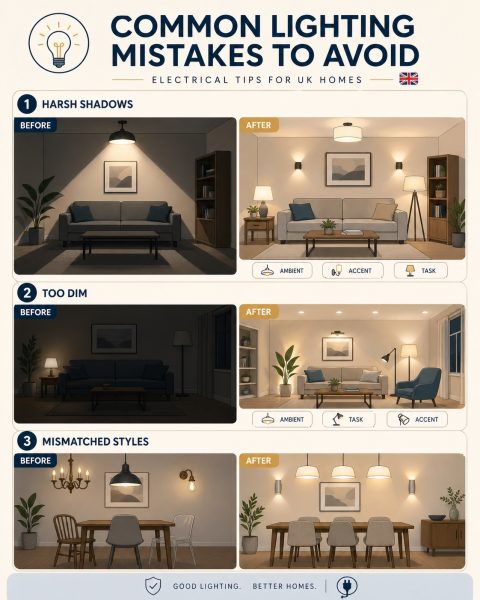
Incorporating a carefully considered lighting scheme not only enhances the physical safety of your home's busiest thoroughfare but also maximises its decorative potential. Remember to fit your different lighting layers on separate circuits. This clever trick affords you total flexibility: you can bathe the space in bright, functional light for a chaotic morning school run, or you can seamlessly dial it back to a gentle, welcoming glow when hosting evening guests. Ultimately, your entryway should proudly celebrate the unique warmth of your home from the exact moment the front door swings open.
Budgeting for Your Lighting Project
When embarking on a home renovation or a simple room refresh, lighting is all too often treated as a mere afterthought. However, achieving that flawless layered scheme—marrying the statement-making allure of pendant lights with the subtle, atmospheric glow of wall lights will require careful financial planning. Establishing a clear, realistic budget from the very outset ensures you do not overspend on a single focal piece while neglecting the crucial ambient and task layers that ultimately define the mood of your space. Creating a comprehensive budget means considering not just the initial retail price of the light fittings, but also the costs associated with professional installation, smart home controls, structural making-good, and ongoing energy consumption.
To effectively allocate your renovation funds, it helps to break down the lighting scheme into its component parts. Pendant lights, which often serve as the primary decorative feature suspended above a dining table, kitchen island, or taking centre stage in a living room, tend to command a significantly larger portion of the budget. Depending on the craftsmanship and materials utilised such as hand-blown glass, brushed brass, or bespoke, artisanal ceramics, a high-quality pendant can cost anywhere from a modest £100 to well over £1,500 for more design led piece. Conversely, wall lights, which provide the essential accent and task lighting necessary for a well-rounded scheme, are generally more affordable on an individual basis. However, since you will almost certainly require them in pairs or multiples to create a balanced, symmetrical effect within a room, their cumulative cost must be carefully factored into your initial spreadsheet. For highly detailed breakdowns of ongoing renovation costs, resources such as Homebuilding & Renovating offer invaluable guidance to ensure you stay on track.
Perhaps one of the most common pitfalls when planning a residential lighting budget is failing to account for the cost of professional installation. Layering pendant and wall lights frequently involves complex first-fix electrical work. This is especially true if you are chasing new wires into solid plaster walls to conceal the separate electrical feeds for your beautiful new sconces, or if you find yourself needing to reposition existing ceiling roses to achieve the optimal placement for a stylish cluster of pendants. In the UK, hiring a qualified, registered electrician, such as one certified by NICEIC or NAPIT—is absolutely essential for both your personal safety and strict compliance with Part P of the Building Regulations. Depending on your geographical location and the specific complexity of the job, day rates for a fully certified electrician typically range between £250 and £400. Furthermore, it is highly recommended to set aside an extra 15% to 20% of your total lighting budget as a contingency fund. This safety net will comfortably cover unexpected rewiring hurdles, as well as the inevitable plastering, filling, and redecorating costs that arise after chasing cables into existing masonry.
Another critical component to factor into your financial planning is the sophisticated control system. The true magic of any layered lighting design lies in the ability to control your striking pendant and subtle wall lights completely independently of one another. This refined level of control empowers you to seamlessly shift the ambience of the room from bright and functional for daytime tasks, to wonderfully soft and intimate for relaxing evening gatherings. Investing in high-quality architectural dimmer switches, smart LED bulbs, or comprehensive automated lighting systems will undoubtedly increase your initial capital outlay. However, over time, a carefully considered smart lighting strategy dramatically enhances both the daily functionality and the overall market value of your property. Finally, do not forget to account for the ongoing cost and efficiency of the light sources themselves; prioritising premium, dimmable LED fixtures significantly curtails long-term energy bills and minimises physical maintenance, guaranteeing that your carefully curated ambience remains a surprisingly cost-effective luxury for many years to come.
Conclusion: Transform Your Space with Layered Lighting
Mastering the art of layered lighting is, without a doubt, one of the most effective ways to elevate the interior design of your home. As we have explored throughout this guide, relying on a single overhead light is a surefire method to make a room feel flat, sterile, and uninviting. By choosing to layer your lighting, specifically through the considered combination of pendant lights and wall lights, you can instantly transform any room into a multi-dimensional, cosy, and highly functional environment. Layering removes the harsh shadows that come from relying solely on ambient lighting, ensuring that the glow cascading across your living spaces is even, warm, and exceptionally welcoming.
Pendant lights serve as the undeniable centrepiece of your lighting scheme. Whether suspended dramatically above a rustic wooden dining table or acting as a striking focal point in a high-ceilinged hallway, pendants provide the necessary ambient and task lighting that grounds a room. However, pendants alone cannot shoulder the entire burden of illumination. This is where wall lights step in to harmonise the overall aesthetic. Wall sconces and flush-mounted wall lights effortlessly diffuse light at eye level, softly grazing your walls to highlight architectural features, bespoke artwork, or simply to add a wash of warmth that overhead lighting cannot achieve. Together, they create a beautifully symbiotic relationship that enhances the architectural integrity of your property.
To truly maximise the potential of this pairing, it is crucial to remember the practical elements of your lighting design. Installing high-quality dimmer switches is non-negotiable for those seeking the perfect ambience throughout the day. The ability to lower the intensity of your central pendant lights whilst allowing your wall lights to emit a gentle, supplementary glow is what allows a room to seamlessly transition from an energetic daytime workspace to a relaxed, intimate evening sanctuary. Furthermore, paying close attention to colour temperature—measured in Kelvins—will ensure your scheme remains cohesive. Opting for warm white bulbs (around 2700K) across both your pendants and wall fittings guarantees a unified, snug atmosphere. For further inspiration on customising your home's atmosphere, you might want to explore the expert design advice available through authoritative sources such as Ideal Home's lighting ideas guide.
Investing in smart home technology can also elevate this experience even further. Smart lighting systems allow you to programme distinct scenes, meaning that achieving the precisely desired balance between your statement pendant and your subtle wall lights is only ever a tap away on your smartphone or a quick voice command.
Ultimately, learning how to layer lighting is about more than just practical illumination; it is about injecting your unique personality into the very fabric of your home. You do not need to feel constrained by rigid rules. Feel free to mix and match materials—perhaps pairing a sleek, brass pendant with matte ceramic wall sconces to create a tactile, visually engaging contrast. Allow your lighting choices to evolve with your lifestyle. By harmonising pendant lights with strategically placed wall lights, you are not merely brightening a space; you are actively shaping its mood, character, and emotional resonance. Transform your home today by viewing lighting not as an afterthought, but as the foundational element of a truly spectacular interior layout. Start evaluating those dark corners, reconsider that solitary ceiling rose, and begin your journey towards a flawlessly illuminated home.