

10 Best Ways to Use Dimmable LED Bulbs for Mood Lighting at Home (Without Wasting Money)
Dimmable LED bulbs can do far more than simply brighten or darken a room; when used well, they shape how calm, focused, or sociable you feel in a space. In one dementia-care study, people exposed to dynamic, daylight‑simulating lighting showed over 50% higher exposure to supportive light levels and clear improvements in mood, social connection, and sense of “feeling at home.” Thoughtful mood lighting at home works on the same principles: the right dimmable LEDs, matched with the right dimmer switches, help you create scenes that support relaxation, conversation, or concentration while using far less energy than old incandescent lamps.
Key Takeaways
| Question | Answer |
|---|---|
| What makes a good dimmable LED bulb for mood lighting? | Look for clearly marked dimmable LEDs, warm or soft‑white colour temperatures, and compatibility with trailing‑edge dimmers like the intelligent models designed for LED loads in the Lieber Silk White 1 Gang Intelligent Dimmer. |
| Do I need special switches for dimmable LED mood lighting? | Yes. Standard old dimmers can flicker or buzz with LEDs. Modern trailing‑edge units, such as the Lieber Silk White 2 Gang Intelligent Dimmer, are designed to work with low‑wattage LED bulbs for smooth dimming. |
| Where can I find dimmable LED bulbs by fitting type? | For mood lighting projects, it helps to shop by cap style. You can explore options via the E27 LED bulbs and E14 LED bulbs collections to match your existing lamps. |
| What colour temperature is best for cosy, relaxing mood lighting? | Warm‑white LEDs around 2700–3000K are ideal. Collections like 3000K LED bulbs give a soft, inviting glow that works well when dimmed in living rooms and bedrooms. |
| How do I avoid flicker and buzzing when dimming LEDs? | Use quality dimmable bulbs, stay within the dimmer’s minimum and maximum wattage, and follow guidance such as the steps in how to troubleshoot dimmer issues if you notice problems. |
| Can downlights be used for mood lighting? | Yes—especially dimmable models. Start with adjustable options from the indoor downlights category and pair them with LED‑compatible dimmers for layered ambience. |
| Where do I choose LED bulbs by shape for different mood effects? | For classic lamps and pendants, GLS‑shape bulbs spread light evenly. Browse shapes in the GLS bulbs section and pick dimmable options for smoother mood control. |
1. Why Dimmable LED Bulbs Are the Best Choice for Mood Lighting
LEDs are now the default choice for home lighting because they use at least 75% less energy than incandescent bulbs and last far longer. For mood lighting, dimmable LEDs add another layer of control, letting you fine‑tune brightness from bright and functional down to soft and intimate levels without wasting energy.
Mood lighting is not just about aesthetics; it also affects how you feel and function. Studies on dynamic, circadian‑aware lighting show measurable improvements in mood, rest‑activity patterns, and even feelings of comfort and belonging when people are exposed to thoughtfully designed light levels over time.
LED Bulbs Collections for Mood Lighting
When planning mood lighting, it is helpful to start from a broad choice of lamps and then narrow down by fitting, colour temperature, and shape. A general LED bulb collection that includes dimmable variants gives you flexibility to match fixtures across your home while keeping the same visual character of light.
2. Matching Dimmable LED Bulbs with the Right Dimmer Switch
Many problems people blame on “bad” LED bulbs—like flicker, buzzing, or lights not turning fully off—actually come from incompatible dimmer switches. Traditional leading‑edge dimmers were designed for high‑wattage incandescent loads, not low‑wattage LEDs, so they often struggle with modern fittings.
For stable mood lighting, use a trailing‑edge, LED‑compatible dimmer that clearly specifies its LED load range. Intelligent dimmers can also auto‑detect and switch between trailing‑edge and leading‑edge modes, which helps if you are mixing older halogen fixtures with new dimmable LEDs during a gradual upgrade.
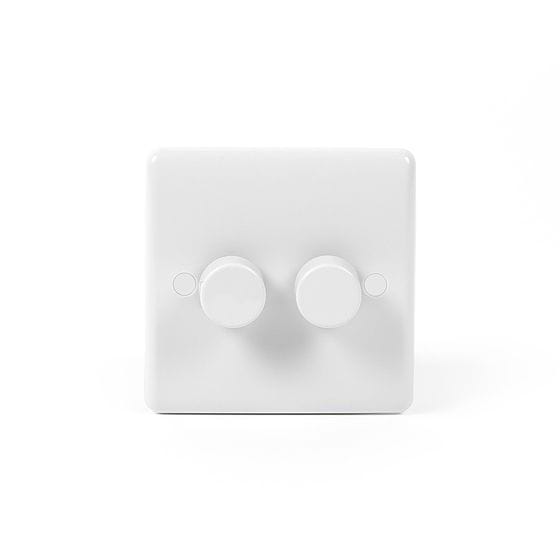
Lieber Silk White 2 Gang Intelligent Dimmer (150W LED)
The Lieber Silk White 2 Gang 2 Way Intelligent Dimmer 150W LED is a good example of a modern LED‑ready dimmer. Priced at £43.00, it supports up to 150W of dimmable LED load or 300W of halogen/incandescent, giving you capacity for multiple fittings on each circuit while staying within safe limits.
This unit uses an Enkin PDM150 module with soft‑start technology that brings your lights up to the chosen level over 1–2 seconds, which is kinder to both eyes and electronics. It can be set to trailing‑edge or leading‑edge via a button, making it practical in homes where you are upgrading lighting room by room.

3. Single‑Circuit Mood Control: 1 Gang Intelligent LED Dimmers
Not every room needs multi‑circuit control. For smaller spaces like bedrooms, home offices, or cosy dining nooks, a single dimmable circuit is often enough to create layered mood lighting when combined with floor or table lamps on separate plug‑in dimmers.
In these situations, a 1‑gang intelligent dimmer gives you smooth, wall‑mounted control over your main ceiling lights while keeping cost and complexity low. You can then complement that with portable lamps to add depth and shadow.
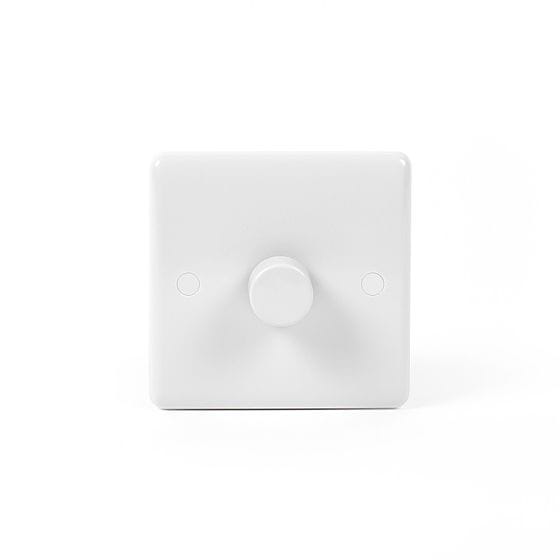
Lieber Silk White 1 Gang Intelligent Dimmer (150W LED)
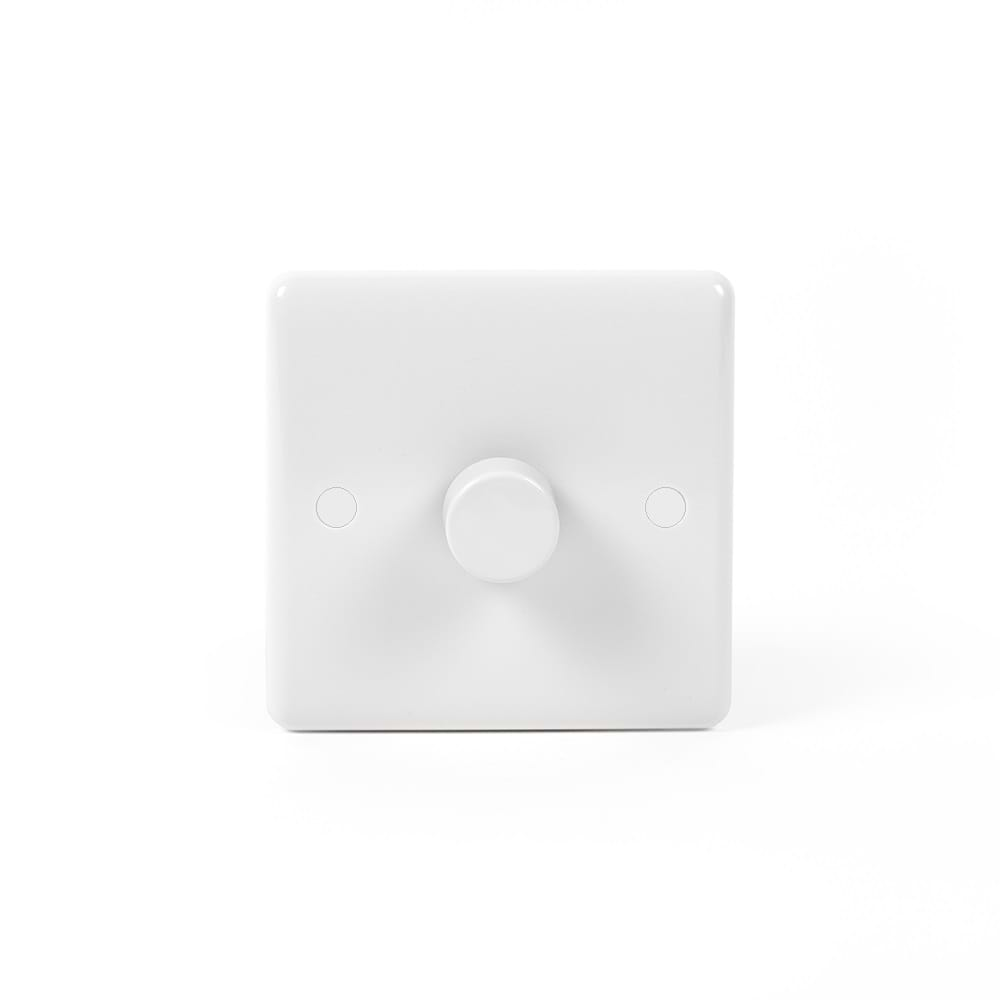
The Lieber Silk White 1 Gang 2 Way Intelligent Dimmer 150W LED offers the same Enkin PDM150 engine as its 2‑gang counterpart but in a single‑circuit format. At around £22.00, it is a cost‑effective upgrade if you want to make one room’s lighting more flexible without rewiring your whole home.
It supports up to 150W of dimmable LED or 300W of traditional lamps and uses soft‑start and thermal protection for reliability. The satin white curved‑edge finish blends into most interiors, so your focus stays on the light itself rather than the hardware.
4. Choosing the Right LED Bulb Fittings (E27, E14 & More)
Before you think about colour temperature or brightness, you need the correct cap type so your dimmable LED bulbs physically fit your fixtures. The most common domestic screw caps are E27 (large Edison screw, often used in pendants and table lamps) and E14 (small Edison screw, typical in chandeliers and wall lights).
For mood lighting, mixing fittings is normal: you might have E27 floor lamps for area light and E14 wall lights for accent or sparkle. As long as each bulb is clearly labelled dimmable and your dimmer is rated for the combined LED wattage, you can control both types on a single circuit for cohesive scenes.
Comparing Fittings for Mood Lighting
| Fitting Type | Typical Use in Mood Lighting | Notes |
|---|---|---|
| E27 | Floor lamps, pendants, large table lamps | Good for main ambient pools of light; wide choice of dimmable bulbs. |
| E14 | Wall lights, chandeliers, bedside lamps | Excellent for accents, directional and decorative lighting. |
| Downlight GU10 / integrated | Ceilings, task and wash lighting | Best when combined with dimmers to avoid harshness. |


5. Picking Colour Temperature for Cosy vs. Energetic Mood Lighting
Colour temperature, measured in Kelvin (K), has a strong effect on how a room feels. Warm‑white LEDs around 2700–3000K create a comfortable, evening‑friendly glow, while cool‑white and daylight lamps (4000–6000K) feel crisper and more alert, better suited to task areas like studies or kitchens.
A nocturnal lighting study found that a lower colour temperature around 2800K with appropriate brightness improved cognitive performance and sleep quality compared to higher‑CCT LEDs at night. For mood lighting, that supports using warmer, dimmed LEDs in the hours before bed to wind down without overly suppressing melatonin.
Warm‑White LEDs for Relaxing Spaces
For living rooms, bedrooms, and dining areas, focus on warm‑white dimmable LEDs. When you dim them down, the space feels calmer, and you reduce glare on screens or glossy surfaces—ideal for reading or watching TV without strain.

6. Using LED Downlights for Flexible Mood Lighting
Recessed downlights are often installed for bright, general lighting, but without dimming they can feel flat or harsh, especially in the evening. Switching to dimmable LED downlights controlled by an LED‑compatible dimmer lets you dial brightness down so the room feels softer while still well lit.
You can choose between fixed and tiltable downlights. Tiltable versions help you direct light onto artwork, shelving, or textured walls, adding depth and visual interest—key ingredients for mood lighting that feels considered rather than clinical.
Downlights and Dimmer Compatibility
When planning a downlight‑heavy room, calculate the total LED wattage on the circuit and ensure it stays within your dimmer’s specified range. For example, a 150W LED‑rated dimmer can usually handle multiple downlights, as many modern LED units only draw 5–8W each, but always check both bulb and dimmer documentation.
7. Layering Light: Combining Ceiling, Wall, and Portable LED Mood Lighting
The most successful mood lighting schemes use layers. A simplified approach is: ceiling lighting for overall brightness, wall or downlights for mid‑level emphasis, and portable lamps for close‑up intimacy. All three can use dimmable LED bulbs, but not all have to be on the same dimmer circuit.
For example, you might put recessed downlights and a central pendant on one dimmer, then leave floor lamps and table lamps on smart plugs or inline dimmers. This way, you can keep ceiling lights low while using lamps to highlight seating areas or reading corners without wiring changes.
Typical Layering Plan for a Living Room
- Ceiling LEDs: Dimmable downlights or central fitting on an intelligent wall dimmer.
- Wall lights: E14 or similar bulbs on a secondary dimmer or switched circuit.
- Portable lamps: E27 / GLS‑shape LED bulbs on plug‑in controls for extra warmth.


8. Troubleshooting Flicker and Other Dimmable LED Problems
Even with the right bulbs and dimmer technology, you might run into issues like flicker at low levels, lights cutting out when dimmed too far, or unexpected buzzing. Most of these can be resolved by adjusting minimum/maximum dimming levels or checking that the total load is within the dimmer’s recommended range.
Some intelligent dimmers let you change dimming mode or reset them if they were previously configured for another type of load. If you have mixed LED brands on the same circuit, try to standardise on a single brand or model to ensure consistent behaviour across all fittings.
Common Fixes for Mood Lighting Issues
- Set minimum level: Raise the lowest dim point until flicker disappears.
- Check wiring: Loose connections can cause instability or buzz.
- Confirm compatibility: Ensure both bulbs and dimmer are marked LED‑compatible and dimmable.

9. Everyday Scene Ideas with Dimmable LED Bulbs
Once your hardware is in place, the real benefit of dimmable LED mood lighting is in everyday use. You can set informal “scenes” simply by choosing repeatable dimming levels at different times of day, without needing advanced control systems.
Over time, these small adjustments become habits that support your routine—brighter, cooler light for tasks and chores; softer, warmer light for meals and evenings; and low, indirect light close to bedtime.
Simple Scene Suggestions
| Time / Activity | Suggested Brightness | Suggested Colour Tone |
|---|---|---|
| Morning breakfast | 60–80% on dimmer | Neutral‑warm white (3000–3500K) if available |
| Working from home | 70–90% on dimmer | Neutral or cooler white for focus |
| Evening relaxation | 20–40% on dimmer | Warm‑white ~2700–3000K |
| Movie night | 10–20% on dimmer | Warm‑white, mostly indirect lamps |
10. Budgeting and Comparing Costs for Dimmable LED Mood Lighting
Upgrading to dimmable LED bulbs and compatible dimmers can feel like a significant outlay, but it usually pays back through lower running costs and much longer lifespans. A single quality dimmer controlling several LED fittings can replace multiple lamps and cheap switches that would otherwise be replaced more often.
For example, combining a £22.00 single‑gang intelligent dimmer with a handful of dimmable LEDs is enough to change the feel of a bedroom or home office. Stepping up to a £43.00 2‑gang unit for open‑plan living spaces gives you flexibility to separate kitchen and lounge scenes without doubling your cabling.
Simple Cost Comparison
| Item | Approx. Price | What You Gain for Mood Lighting |
|---|---|---|
| Lieber Silk White 1 Gang Intelligent Dimmer | £22.00 | Smooth control of one ceiling or downlight circuit in a bedroom, office, or snug. |
| Lieber Silk White 2 Gang Intelligent Dimmer | £43.00 | Independent dimming of two zones (e.g., kitchen and dining, or lounge and reading area). |
| Set of dimmable LED bulbs | Varies | Energy‑efficient, long‑life light sources tuned for your preferred mood and colour. |

Conclusion
Dimmable LED bulbs for mood lighting give you practical control over how each room feels and functions, from bright and focused to soft and relaxing. The key is to match clearly labelled dimmable LEDs with modern trailing‑edge, LED‑compatible dimmers, and to plan fittings, colour temperature, and layers of light around how you actually use the space.
With a modest investment in intelligent dimmers and well‑chosen bulbs, you can build a lighting scheme that supports your daily rhythms, improves comfort, and runs efficiently for years. Start with one room, refine the scenes that work best for you, and then extend those principles across your home for consistent, reliable mood lighting everywhere.